Apr 22 2013

‘Sound and Sensible’ Approach to Organic Certification

Published by under News,Views

By  Miles McEvoy, National Organic Program Deputy Administrator, USDA blog

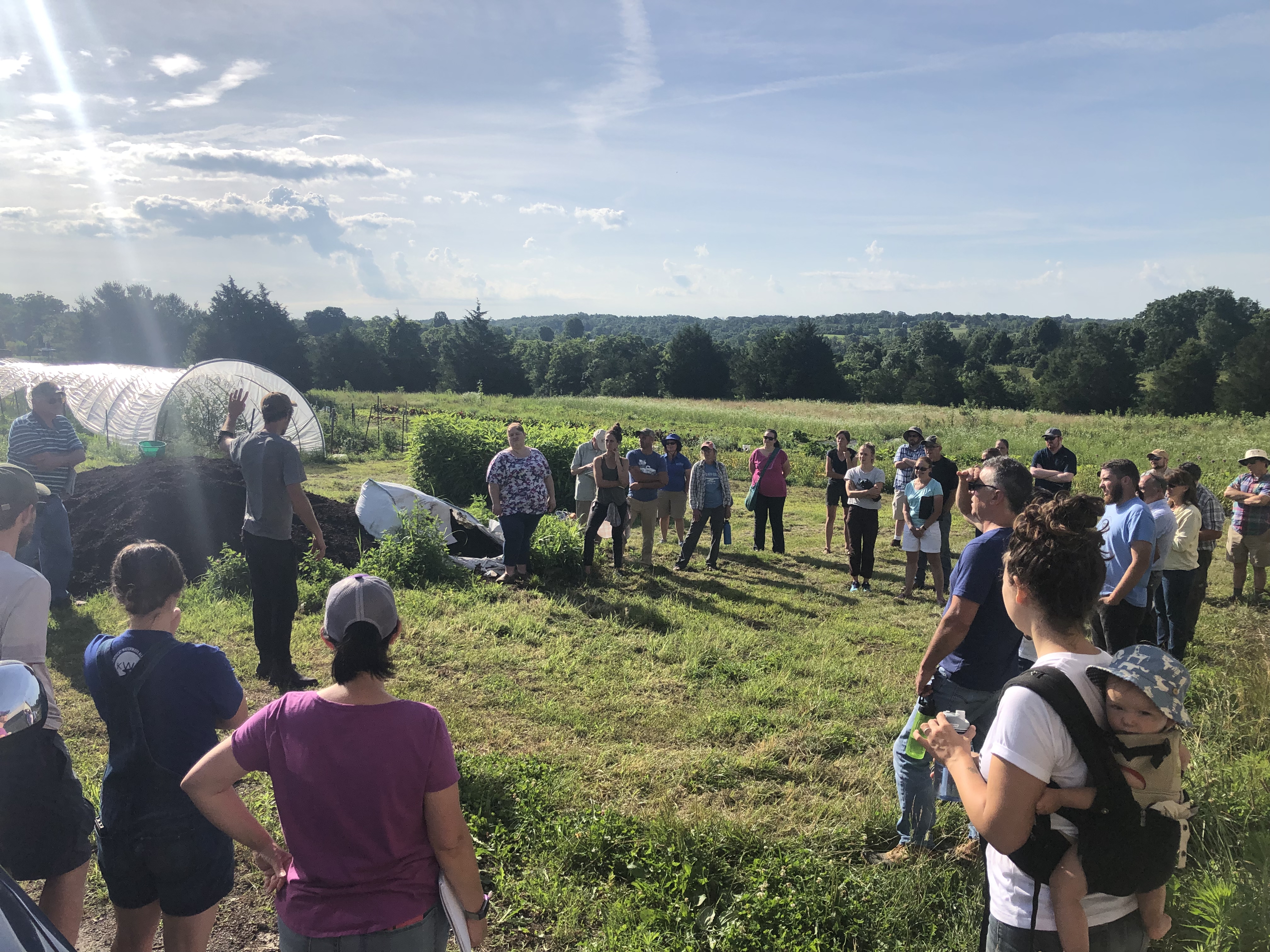
The ‘Sound and Sensible’ initiative is about removing barriers to certification, and working with farmers, like the one pictured here, to correct small issues before they become larger ones.

Consumers purchase organic products expecting that they maintain their organic integrity from farm to market. Under the USDA organic rules, organic farmers must demonstrate they are protecting the environment, supporting animal health and welfare, and producing their products without the use of prohibited substances (including synthetic pesticides).

However, farmers have reported spending more time completing forms and maintaining records. A certain amount of records are essential to ensure organic farmers are meeting the organic standards, such as planting non-genetically modified seeds or raising dairy cattle on organic pasture. But, too much focus on paperwork can detract from farming activities that support organic principles, such as conservation and cycling of resources. To address this, the National Organic Program (NOP) initiated a program aimed at helping reduce the paperwork and other burdensome aspects of organic certification while maintaining high standards, ensuring compliance, and protecting organic integrity.

The ‘Sound and Sensible’ initiative involves identifying and removing barriers to certification, streamlining the certification process, focusing enforcement, and working with farmers and processors to correct small issues before they become larger ones.  The overall goal of this new initiative is to make organic certification accessible, attainable, and affordable for all operations.

Continue Reading »


No responses yet

Apr 22 2013

Is Organic Better? Ask a Fruit Fly.

Ria Chhabra stands in front of her project.

By Tara Parker-Pope, New York Times Science Blog

When Ria Chhabra, a middle school student near Dallas, heard her parents arguing about the value of organic foods, she was inspired to create a science fair project to try to resolve the debate.

Three years later, Ria’s exploration of fruit flies and organic foods has not only raised some provocative questions about the health benefits of organic eating, it has also earned the 16-year-old top honors in a national science competition, publication in a respected scientific journal and university laboratory privileges normally reserved for graduate students.

The research, titled “Organically Grown Food Provides Health Benefits to Drosophila melanogaster,” tracked the effects of organic and conventional diets on the health of fruit flies. By nearly every measure, including fertility, stress resistance and longevity, flies that fed on organic bananas and potatoes fared better than those who dined on conventionally raised produce.

Read the full story on the New York Times Science blog.


No responses yet

Feb 18 2013

Nature Safe®, a Kentucky Company, is Honored to be Named 2013 Welcome Reception Sponsor

Published by under Happenings,News

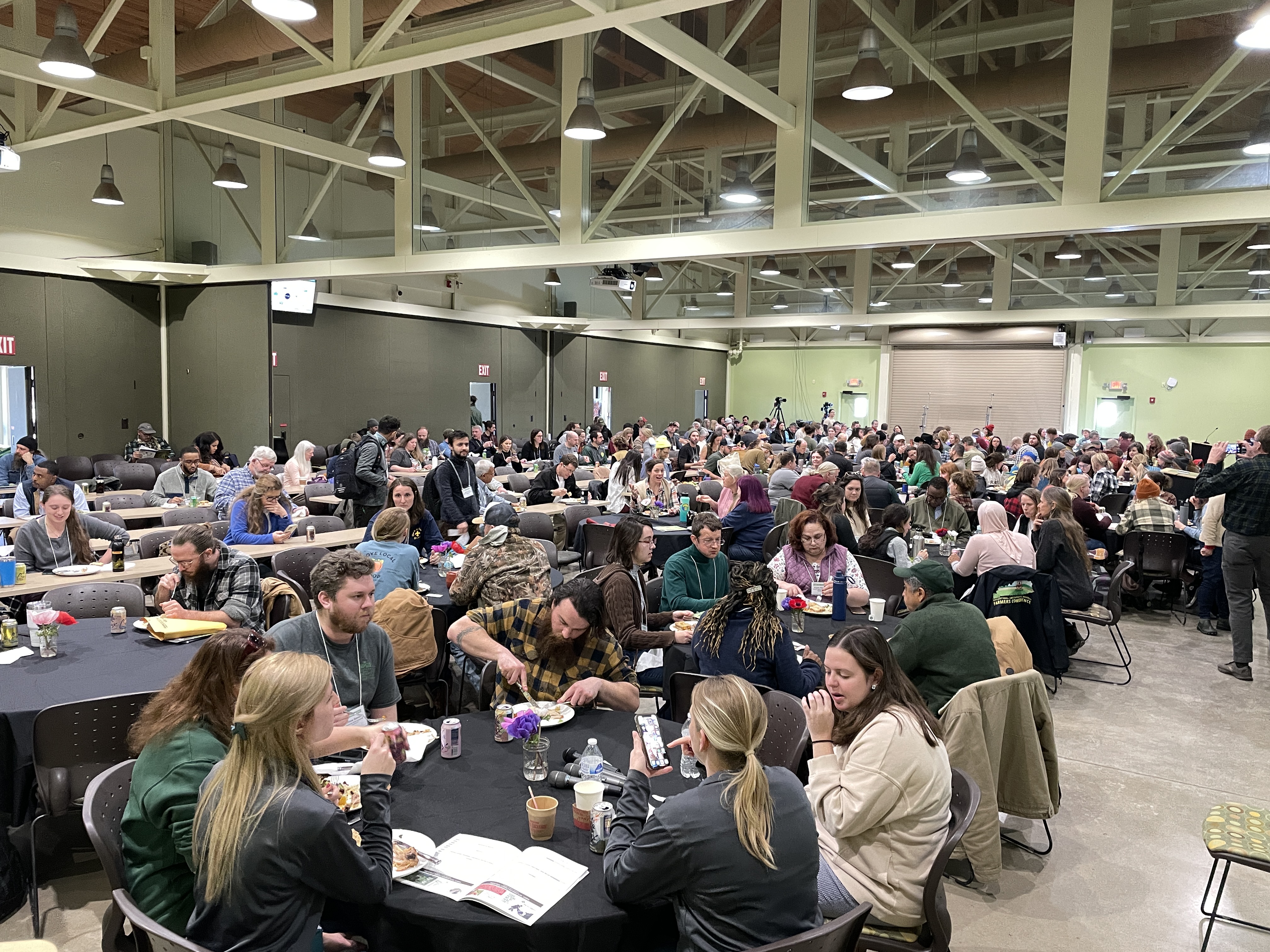
The Organic Association of Kentucky invites you to join us at the Welcome Reception for the 2013 Organic Conference, February 28, 2013, from 4-6PM at Boone Tavern Hotel, Berea, KY.

nature_safeSustainability is a vital part of our business philosophy. As the first fertilizer supplier certified through Audubon’s Cooperative Sanctuary Program, Nature Safe is synonymous with Environmental Stewardship excellence. Nature Safe offers a complete line of fertilizers including OMRI fertilizers for certified organic agriculture.

Nature Safe® Natural & Organic Fertilizers are formulated by Griffin Industries of Cold Spring, Kentucky, a wholly owned subsidiary of Darling International, America’s largest provider of animal proteins and other essential nutrients for the feed industry. The organic feed compounds demanded by animals are also required by plants for their growth, protection, reproduction and ultimate survival. Nature Safe has simply taken the same approach used to maximize animal nutrition to create a family of products that emphasizes soil and plant health.

Continue Reading »


No responses yet

Jan 23 2013

Microloans Now Available for Young and Beginning Farmers

Earlier this week, USDA announced the start of an exciting new loan program that will better meet the credit needs of small farms of all types, including especially young farmers and those serving local and regional food markets, including urban farmers.

The final rule for the proposed microloan program was published today, and the Farm Service Agency (FSA), which is USDA’s credit lending arm, intends to begin making these smaller loans effective immediately.

NSAC and several member organizations, including the National Young Farmers Coalition, California FarmLink, and others, spearheaded initial efforts to encourage USDA to develop a more streamlined loan program that specifically targets smaller and less-established producers who typically have smaller credit needs.  We continue to be big supporters of the FSA credit programs for family farms in general and for beginning farmers and socially disadvantaged farmers in particular.  The new microloan program helps fill an additional, important niche within the overall FSA loan portfolio.

We are very pleased with USDA’s responsiveness and with the new lending option.  We also continue to pursue further improvements through the farm bill process in Congress — more on that below.

Microloan Program Details

These new microloans will be funded through FSA’s existing Direct Operating Loan program, and will have a maximum loan amount of $35,000, which is much lower than the $300,000 loan cap for regular FSA farm operating loans.  These smaller loans are intended to cover smaller purchases, such as seeds, animals, small equipment, or other investments that young and other beginning farmers require to finance their operations.

Farmers will be required to secure these smaller microloans with collateral in the form of farm property worth at least 100 percent of the loan amount.  Similar to other FSA loans, a third party pledge of security or co-signer will be accepted to meet these security requirements when necessary.

The new microloan program will feature a simplified and streamlined application process, and will require less paperwork for farmers to fill out and appropriately reflects the smaller loan amount.  The microloan application will be available online, which was a recommendation included in NSAC’s comments on the initial rule published last summer.  Although FSA agrees that an online application process would be an efficient alternative to the present loan application process, microloan applications cannot at the current time be completed and submitted electronically so therefore must be filed in person at the local FSA office.

In order to be eligible for the new microloan program, a farmer must have sufficient prior experience working on a farm, but borrowers will be given additional flexibility in meeting FSA’s farm management experience requirement.  This includes small business experience, participating in a self-directed apprenticeship, or having prior involvement with an agricultural organization, such as 4-H, FFA, farm incubator programs, and community-based farm training organizations.  FSA intends to provide additional guidance on how migrant workers can meet the management requirement in order to take into account their prior farm experience.

FSA will not require an itemized cash flow budget for microloan applicants, a previous requirement that has made it difficult for diversified fruit and vegetable growers and community-supported agriculture farmers to participate in FSA lending programs.  FSA’s new flexibility in matching production and income loan-making measurement tools to specific types of production and marketing is to be commended.

Ensuring Successful Implementation

There are several measures that will help determine the ultimate success of this new federal credit program, and which NSAC included in our public comments submitted on the initial rule.

1. Training – It is critical that FSA loan officers are provided formal training on the new microloan program and how to make loans and asses the financial risks, projected yields and profitability of non-traditional borrowers, including small, diversified operations selling through direct or alternative marketing channels or using sustainable or organic production practices.  FSA intends to provide additional guidance to local and state FSA offices on how to make loans to cover organic and less traditional crop production.

2.  Outreach — The extent to which FSA is able to get the word out to potential borrowers who may not be accustomed to or familiar with the services that FSA provides will be another key element in implementing this new loan program successfully.  NSAC will be working with our member organizations and FSA to conduct outreach to farmers who may be interested and able to benefit from this new loan program.

3.  Evaluation — Finally, it will be necessary for FSA to periodically and regularly evaluate this new credit program in order to assess borrower participation and asses the extent to which it is sufficiently meeting the credit needs of small, beginning, and socially disadvantaged producers, including those who sell into local and regional markets.  NSAC will be tracking this information as it becomes available and providing feedback to FSA on program implementation.

Additional Program Changes Needed

There are several provisions that NSAC has recommended be incorporated into the new microloan program, but which FSA cannot adopt until there are statutory changes made in the Farm Bill.  These include:

  • exempting microloans from counting towards borrower term limits;
  • adjusting the limited resource interest rate so that it applies to microloans and is set on a flexible formula basis relative to prevailing interest rates; and
  • establishing an intermediary relending program that would allow non-profit organizations and community financing entities who are already involved in microlending to use their expertise to successful implement this new program.

Continue Reading »


No responses yet

Jan 15 2013

Help Wanted

Published by under Farm Topics,Jobs,News

HelpWantedPosition:
Farm Manager, blueberry farm
Location:
Near Burkesville, KY.Job Duties:
- farming blueberry bushes, plus growing nursery
- knowledge of blueberry growing
- knowledge of certified organic growing practices
- able to run diesel tractors
- able to run power equipment: weed eater, brush mower, etc…
- over seeing harvest labor
- communicate effectively

Requirements:

- looking for married couple to live on property and work farm
- prefer farming experience
- must have exceptional work ethic
Compensation:
- home to live in (utilities not included)
- $1000 monthlyPlease send resume and 3 professional references if interested in position.

BestGroLLC@gmail.com

No responses yet

Jan 14 2013

Kentucky Organic Corn Workshop in Bowling Green, January 16th

Organic cornJoin the Kentucky Cooperative Extension Service for an in-depth workshop on the production and marketing of organic corn.  Hear from agricultural specialists, experienced farmers, and four farmers who are participating in our on-farm demonstrations.

You’ll learn about:  Crop rotations, managing soil fertility, weed control, marketing, organic certification, and profitability

  • Who: Farmers, Ag professionals, extension agents, and those who are interested in starting a new organic enterprise.
  • What: The Kentucky Organic Corn Workshop
  • When: Wednesday, January 16th 9am-4pm.  Just two days before the Kentucky Commodity Conference.
  • Where:  Bowling Green, KY at the Warren County Cooperative Extension Service Office (3132 Nashville Rd.)
  • Lunch will be provided for pre-registered attendees only

Continue Reading »


No responses yet

Jan 14 2013

Highlights from OAK Winter Meeting

logoJanuary 7, 2012
Organic Association of Kentucky Winter Meeting
Kentucky Fruit and Vegetable Growers Conference, Lexington, Kentucky
Board Present: Larry Brandenberg, Cheryll  Frank, Sarah Fritschner, Brian Geier, Molly Stotts, Adam Barr.  A total of 37 people were present.

3rd Annual Organic Conference Update:

Cheryll Frank: The 3rd annual conference is scheduled for March 1-2, 2013, 8am-4pm, at Berea College.  Attendance/registration is free for OAK members until February 17th.  A $10 late fee payable at the door will be charged for registrations postmarked after February 17th.   The Historic Boone Tavern Hotel is holding a block of rooms for a reduced group rate ranging from $79 for a single room, $99 for a double room, $115 for a suite. Download registration packet here.

Continue Reading »


No responses yet

Jan 14 2013

NY Times’ Mark Bittman on “That Flawed Stanford Study”

“I tried to ignore the month-old “Stanford study.” I really did. It made so little sense that I thought it would have little impact.

That was dumb of me, and I’m sorry.

The study, which suggested — incredibly — that there is no “strong evidence that organic foods are significantly more nutritious than conventional foods,” caused as great an uproar as anything that has happened, food-wise, this year. (By comparison, the Alzheimer’s/diabetes link I wrote about last week was ignored.)

That’s because headlines (and, of course, tweets) matter. The Stanford study was not only an exercise in misdirection, it was a headline generator. By providing “useful” and “counterintuitive” information about organic food, it played right into the hands of the news hungry while conveniently obscuring important features of organic agriculture.”

If I may play with metaphor for a moment, the study was like declaring guns no more dangerous than baseball bats when it comes to blunt-object head injuries. It was the equivalent of comparing milk and Elmer’s glue on the basis of whiteness. It did, in short, miss the point.”

Read the article at nytimes.com


No responses yet

Jan 09 2013

Fund-a-Farmer Grants

food-animal-concerns-trustFood Animal Concerns Trust (FACT) is now accepting grant applications for its Fund-a-Farmer Project, which provides small grants to qualifying humane farmers who need assistance in improving the welfare of their farm animals. Grants of up to $1,500 will be awarded for projects that

(1) help farms transition to pasture-based systems,

(2) improve the marketing of their humane products, or

(3) more generally enrich the conditions in which farm animals are raised.

Working, independent family farmers that raise pigs, broiler chickens, laying hens, dairy cows and/or beef cattle are eligible to apply for any of the three types of grants.  Projects involving goats and sheep are only eligible for marketing grants.  Applications must be submitted online or postmarked by May 1, 2013 for awards made in August 2013. View guidelines and apply online at . Contact Lisa at grants@foodanimalconcerns.org or 773-525-4952 with questions.


No responses yet

Jan 03 2013

‘Fiscal Cliff’ Deal Cuts Organic Programs, Maintains Big Ag Subsidies

Buried in the 150-page “fiscal cliff” tax bill passed New Year’s Day is a last-minute farm bill extension that removes funding for numerous programs that assist organic farmers, small farmers, and beginning farmers. The legislation fails to provide disaster aid for farmers or livestock producers, and provides no mandatory funding for specialty crop and organic provisions, beginning farmer and rancher programs, and numerous conservation measures.

Research programs that were cut include: Continue Reading »


One response so far

Next »